
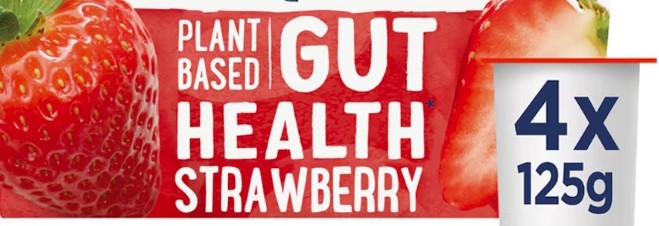
Let’s talk about soy yogurt — glowing quietly in the chilled aisle with its health halo firmly polished.
- Dairy-free.
- Gluten-free.
- Lactose-free.
It sounds less like a snack and more like a weekend wellness retreat in a recyclable pot.
And genuinely — for people who can’t tolerate dairy, are plant-based, or simply prefer it, soy yogurt can be a brilliant alternative. Soy itself is a solid plant protein, versatile, and nutritionally useful.
But… let’s lift the lid. Literally and nutritionally.
When “Healthy” Starts Behaving Like Pudding
Some of these virtuous-looking little pots are packing 8 grams of sugar per serving. Now, on paper, that doesn’t look outrageous. We’re not talking about mainlining syrup. But context matters:
- The pots are small.
- They’re eaten quickly.
- They’re often followed by another because… they’re tiny and delicious.
Suddenly that “light, healthy snack” has turned into 16 grams of sugar before you’ve even located a spoon that doesn’t taste faintly of last night’s curry.
And here’s the twist: while the packaging is busy telling us how wholesome it is, nutritionally it’s starting to behave suspiciously like dessert that’s wearing a gym kit.
The Marketing is very, very good at what it does. Words like:
- Plant-based
- Gut-friendly
- High in protein
- Natural
- Clean
…make us assume we’re making a nutritionally superior choice.
Our brains hear “plant-based” and think: virtuous woodland creature.
Our blood sugar sometimes hears: cheesecake in active-wear.
Meanwhile, the sugar content is casually sitting there on the label with its feet up, absolutely not joining in the step class.
The Soy Isn’t the Problem
Let’s be clear — soy itself is not the villain of the fridge. Unsweetened soy yogurt can:
- Provide plant protein
- Contain beneficial bacteria (if live cultures are included)
- Be a helpful dairy alternative
The issue isn’t the soy. The issue is when the yogurt quietly shifts from “breakfast option” to “pudding with PR training.”
Without much fibre to slow absorption and with added sugars boosting sweetness, blood sugar levels can rise faster than people expect from something marketed as a healthy choice. That spike-and-dip cycle? It can leave you hungrier than anticipated.
And then we blame ourselves.
Again.
The Quiet Sugar Creep
What makes this sneaky is that it doesn’t feel indulgent.
You didn’t choose chocolate mousse.
You chose something in the health aisle.
That psychological difference matters. When we think we’re being virtuous, we rarely question it. We assume it must be better.
But “dairy-free” doesn’t mean “sugar-free.”
“Plant-based” doesn’t mean “metabolically neutral.”
And “natural flavourings” can still be riding shotgun with added sugar.
The Moral of the Pot
The front label is glossy. The ingredients list is not.
But the ingredients list is significantly more honest. Soy yogurt doesn’t automatically deserve sainthood because it’s plant-based. It just deserves the same scrutiny as everything else in the trolley.
Flip it over.
Read it.
Decide consciously.
And remember — if it tastes suspiciously like pudding, it might just be pudding in disguise.
Sugar sometimes wears yoga pants.